


TLU SA wishes new Minister of Agriculture well, calls for science-based decision-making
TLU SA has noted President Cyril Ramaphosa’s announcement of changes to the National Executive, including the appointment of Willie Aucamp as Minister of Agriculture.
The announcement comes in the lead-up to the municipal elections on 4 November and against the backdrop of political developments within the Government of National Unity. While political change is part of any democracy, the agricultural sector cannot afford the consequences of political uncertainty and Cabinet reshuffles.
“Agriculture does not operate according to political terms. The sector requires stability, policy continuity and decision-making that prioritises the long-term interests of food production. The challenges facing producers will not wait for political processes to be concluded,” says Bennie van Zyl, General Manager of TLU SA.
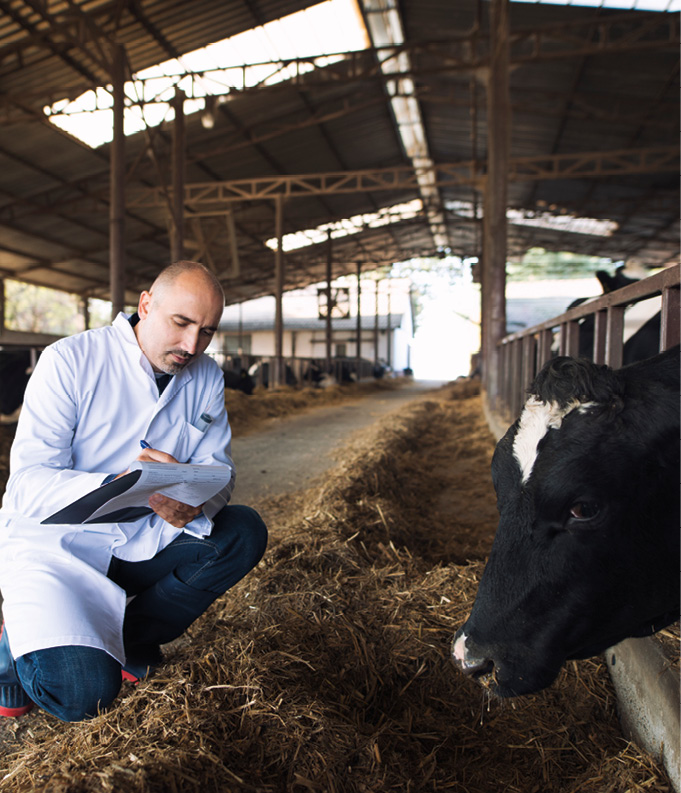
According to TLU SA, the immediate priority should be the control of foot-and-mouth disease (FMD). It is essential that a collective approach be adopted as soon as possible, making use of all available expertise and capacity in both the public and private sectors to bring the disease under control.
“Now is the time for constructive, forward-looking action plans. What agriculture needs is for markets to return to operating freely and efficiently as soon as possible, particularly with regard to foot-and-mouth disease.”
Van Zyl says that managing agriculture requires specialised expertise.
“Agriculture is the management of biological processes to achieve profitability. At the same time, it is an economic process that is ultimately responsible for the strategically essential supply of food. The greatest stabilising factor in any country is that there is food on people’s tables. Political objectives should therefore never interfere with the decisions required to protect and expand food production.”
He emphasises that the responsibilities of the Minister of Agriculture extend far beyond the management of FMD alone. Issues such as input costs, biosecurity, property rights, rural safety, market access, infrastructure and policy certainty all require equal attention.
“Minister Aucamp will need to gain a thorough understanding of the increasing pressure that input costs place on producers. This is a challenge that cannot be addressed by government alone. Organised agriculture should be regarded as a partner in identifying practical solutions that strengthen the sustainability of food production.”
TLU SA further believes that one of Minister Aucamp’s greatest challenges will be to further develop the culture and approach within the Department of Agriculture. The sector needs a department that farmers experience as supportive rather than as part of the problem.
The organisation also thanks former Minister John Steenhuisen for his willingness to engage with organised agriculture during a particularly challenging period for the sector and expresses its confidence that the momentum created through various ongoing processes will not be lost.
“TLU SA trusts that Minister Aucamp will maintain an open-door approach towards organised agriculture. Agricultural organisations represent producers across the full spectrum of the industry and serve as an important voice for both the challenges and the solutions experienced in practice. We look forward to further strengthening this relationship in the interests of the agricultural sector.”
Van Zyl concludes: “A demanding task lies ahead. TLU SA wishes Minister Willie Aucamp every success. Our simple advice from organised agriculture is this: farmers do not judge speeches; they judge actions. It is essential that sound agricultural principles prevail and that free-market principles form the foundation against which all policy decisions and legislation are measured.”
FMD control requires all available expertise
TLU SA welcomes government’s announcement of the new national Foot-and-Mouth Disease (FMD) control measures. The organisation regards the amendments as a positive step that could provide greater clarity for livestock producers while recognising the significant economic impact that prolonged outbreaks and restrictive control measures have on the livestock sector.
It is encouraging that greater emphasis is being placed on science-based decision-making and more practical solutions to enable producers to resume production without compromising biosecurity. The increased flexibility around quarantine, the recognition of vaccinated but uninfected animals as healthy animals, as well as alternatives to the culling of entire herds where this is unnecessary, are measures that the industry has long been calling for.
“Farmers have long been asking for clearer guidelines and greater certainty when outbreaks occur. It is encouraging that the new measures seek to strike a better balance between effective disease control and the economic sustainability of livestock farming,” said Bennie van Zyl.
However, Van Zyl cautioned that the success of the new framework will depend not only on the content of the regulations, but also on how they are implemented.
“The Foot-and-Mouth Disease crisis has developed over a long period and is not simply the result of disease outbreaks, but also of an approach that remains, in many respects, constrained by outdated regulations and processes. While the new measures represent a significant improvement, they will not, on their own, be sufficient unless consideration is also given to making the system as a whole more effective.”
He said the greatest challenge remains South Africa’s capacity to detect outbreaks early, manage them effectively and provide adequate support to producers.
“The state simply does not have sufficient capacity on its own to address this challenge at the scale required. That is why every available source of expertise and capacity in South Africa should be utilised. The private sector has highly qualified veterinary expertise and practical experience which, within a properly regulated framework, could play a far greater role in maintaining healthy herds and keeping producers in production.”
TLU SA believes the time has come for a thorough review of the existing regulatory environment.
“Where regulations prevent the optimal use of available expertise and capacity, they should be amended without unnecessary delay. We cannot afford for outdated regulations or administrative obstacles to undermine either the control of Foot-and-Mouth Disease or the sustainability of our livestock producers.”
“Our objective must be to control the disease effectively, protect international markets and, at the same time, ensure that producers can continue to produce food. This requires a modern, practical approach in which every capable stakeholder is given the opportunity to contribute,” Van Zyl concluded.