


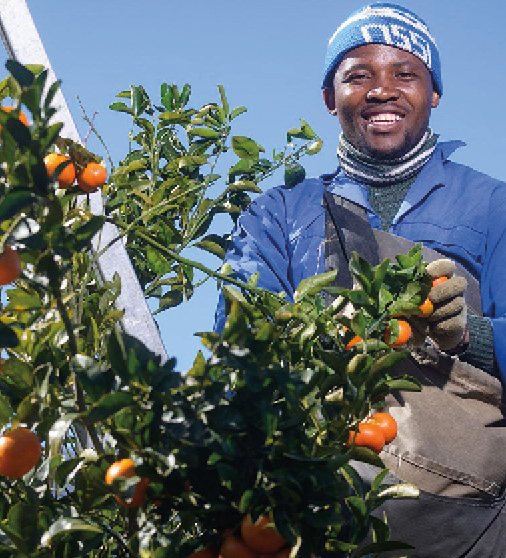
Western Cape still leads on jobs – new Chinese trade deal boosts confidence
Western Cape Minister of Agriculture, Economic Development and Tourism, Dr Ivan Meyer, has responded to a parliamentary question from Member N D Nkondlo on the province’s latest employment figures. The quarterly employment contraction observed in Q1 2026 should be interpreted within the broader context of ongoing national economic pressures.
It is also important to note that quarterly labour market indicators are inherently volatile and susceptible to short-term fluctuations. As such, quarter-on-quarter declines in employment should be treated with caution, as they may reflect transitory disruptions rather than a sustained downturn. Despite this seasonal decline, it is noteworthy that this year, the Western Cape’s employment was 2 883 000, its highest ever recorded employment for the first quarter of any year previously.
The Western Cape continues to outperform all other provinces, by a significant margin, maintaining the lowest unemployment rate in the country. The province recorded a net increase of 22 000 jobs between Q1 2025 and Q1 2026. The provincial unemployment rate also remained stable at 19.6% over this period.
“While we acknowledge the quarterly decline in employment, it is important to emphasise that this forms part of a broader national contraction, with South Africa losing 345 000 jobs over the same period,” said Minister Meyer.
Drivers of job losses are national and structural
Minister Meyer explained that the recent increase in unemployment is driven by a combination of factors rather than a province-specific shock.
These include:
- Global factors and a national economic slowdown, affecting labour demand across all provinces,
- Seasonal employment effects, as temporary festive-season jobs unwind in the first quarter,
- Broad-based job losses across both formal and informal sectors,
- Sector-specific declines, particularly in community and social services, construction, and transport.
In particular, the community and social services sector experienced significant job losses, partly linked to reduced donor and public funding, including global funding constraints affecting healthcare and research programmes.
“These trends point to a challenging labour market environment in which both demand for labour and job sustainability have weakened. Importantly, these dynamics are not unique to the Western Cape,” Meyer said.
Western Cape still leads on recovery trajectory
Despite quarterly volatility, the Western Cape remains the best-performing province in key labour market indicators.
“We remain focused on enabling economic growth and creating an environment where businesses can invest, grow, and create jobs,” Meyer said.
Stronger business confidence underscores provincial resilience
The second quarter 2026 RMB/BER Business Confidence Index (BCI) further reinforces the relative strength of the Western Cape economy.
- The Western Cape BCI increased by 5 points to 55, remaining above the neutral 50 mark,
- By contrast, national business confidence declined sharply to 39,
- The Western Cape is currently the only province above the neutral threshold.
- “This improvement in business confidence, even amid a difficult national environment, global challenges and the recent floods, reflects continued investor trust in the Western Cape’s economic fundamentals and governance environment,” Meyer added.
Committed to lowering unemployment
While acknowledging that “there is still much more ground to cover,” Minister Meyer reaffirmed the Western Cape Government’s commitment to its growth strategy.
“As unemployment remains one of South Africa’s most pressing challenges, the Western Cape will continue to implement proven, evidence-based interventions to drive inclusive growth and create more dignified jobs for our residents,” he said.
Expanded access to Chinese market a major boost for economic growth, jobs, and Western Cape citrus producers – Minister Meyer
Western Cape Minister of Agriculture, Economic Development and Tourism, Dr Ivan Meyer, has welcomed the recent supplementary citrus phytosanitary agreement between South Africa and China as a major step forward in driving economic growth and creating jobs, while unlocking new export opportunities for the province’s citrus industry.
Responding to parliamentary questions, Minister Meyer confirmed that the agreement, formalised on 10 April 2026, will ease export requirements and strengthen market access for Western Cape producers.
“This agreement is a significant breakthrough for economic growth and job creation in the Western Cape. By removing trade barriers and expanding access to the Chinese market, we are creating new opportunities across the agricultural value chain—from farm workers to exporters—while strengthening the competitiveness of our citrus industry,” said Minister Meyer.
Strengthening export resilience
The Minister emphasised that expanded access to the Chinese market comes at a critical time for the agricultural sector, which continues to navigate global uncertainties.
“Growing our export markets is essential to sustaining jobs and unlocking further economic growth. The opening of the Chinese market for increased citrus exports reduces volatility and helps cushion our producers and the workers they employ—against disruptions caused by geopolitical tensions in traditional markets,” he said.
With approximately 20% of South Africa’s citrus production located in the Western Cape, the agreement is expected to have a meaningful impact on export volumes over time, particularly as compliance requirements become more efficient.
Supporting producers to maximise opportunities
Minister Meyer highlighted that the Western Cape Government is actively supporting producers to capitalise on the zero-tariff access to China through a range of targeted interventions.
These include:
- Participation in trade shows and export exhibitions in China
- Facilitating business-to-business engagements with international buyers
- Providing extension and advisory services to ensure compliance with export standards
- Collaborating closely with industry stakeholders to strengthen competitiveness
“Our focus is on ensuring that producers are well-positioned to expand exports, grow their businesses, and in turn sustain and create more jobs in rural communities,” said the Minister.
Strategic advantages of the Chinese market
Minister Meyer pointed out that China presents significant long-term potential for the Western Cape citrus industry due to several key factors:
- Strong demand driven by a population of approximately 1.4 billion people
- Continued economic growth and rising consumer demand
- The advantage of counter-seasonal supply, allowing South African citrus to fill market gaps when Northern Hemisphere production is low
- “This counter-seasonal advantage not only boosts export potential but also supports stable production cycles that are critical for job retention in the sector,” he said.
A collaborative approach
While acknowledging that port and logistics challenges remain a national competency, Minister Meyer reiterated the provincial government’s commitment to working with stakeholders to improve export efficiency.
“Efficient logistics are essential to a thriving export sector, which in turn underpins economic growth and job creation. We will continue working with partners to unlock these gains,” he said.
Driving growth through market diversification
Minister Meyer concluded that expanding access to markets such as China is central to building a resilient and competitive agricultural economy.
“Diversifying export markets is key to growing the Western Cape economy and creating sustainable jobs. This agreement demonstrates how strategic international partnerships can deliver inclusive growth and real benefits for our farmers and rural communities.” 
Western Cape Minister of Agriculture, Economic Development and Tourism, Dr Ivan Meyer