

Supporting agricultural development with Saai and partners
S
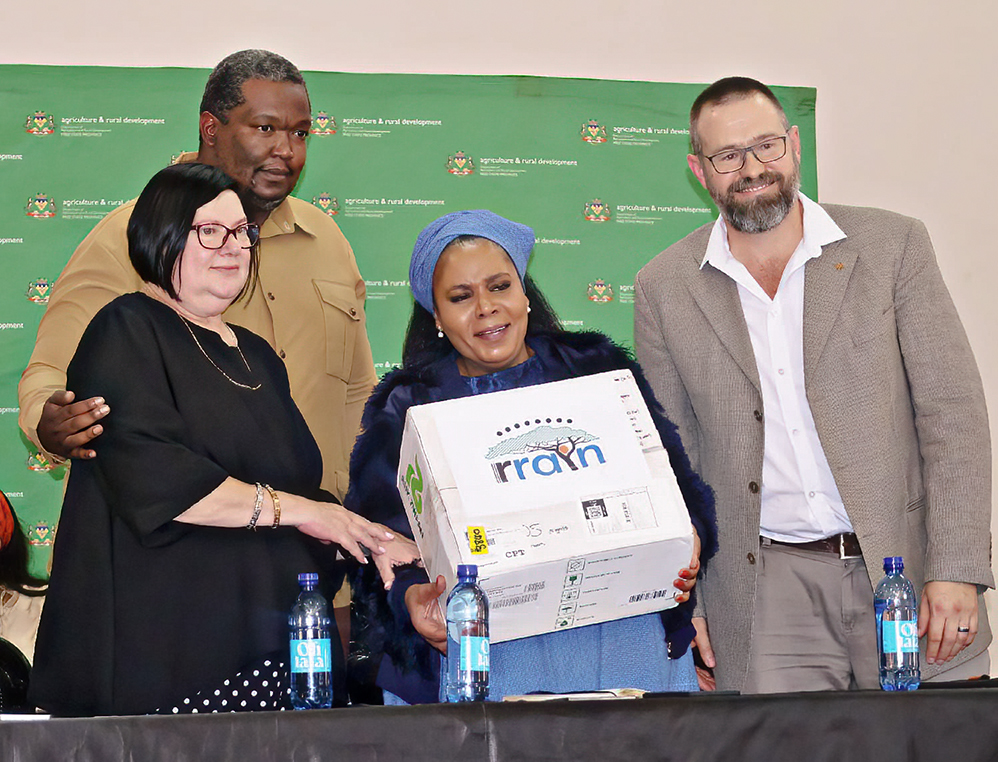
aai and AfriForum, through their agricultural development incubator, Resilient Regenerative Agricultural Initiative NPC (RRAIN), boosted the next phase of Kgosi Gaboilelwe’s agricultural development strategy for the Barolong Boo Seleka nation of Thaba’Nchu by funding the training of the first 20 participants of the backyard vegetable garden programme and by handing over vegetable seed donated by Rijk Zwaan. The training will be conducted by Thabo Olivier from Let’s Grow Food.
This announcement follows on the Ke Nako Launch Event held at Barolong Hall in Thaba’Nchu on Thursday 12 March. The event was attended by various stakeholders, who are collaborating on the implementation of the next phase of the strategy. Agri All Africa, a long-time network partner of AfriForum and Saai, also contributed to the event and will be responsible for ensuring a proper platform for the commercialised agricultural development that will take place.
“The mechanisation, modernisation and commercialisation of small-scale farmers are crucial for wealth creation, ensuring food security and improving the general socio-economic conditions of deep rural communities. We are grateful to be involved in this initiative that creates opportunities for small-scale farmers to develop and grow to their full potential,” says Dr Theo de Jager, board chairman of Saai.
“It is a privilege for AfriForum to continue with this journey and partnership that was established six years ago. We are grateful that the commitment, hard work and perseverance of the last few years contributed towards establishing the foundation that enables this next phase of the agricultural development of Thaba’Nchu. This collaborative initiative underscores that peaceful and prosperous co-existence of different cultural communities in the country is achievable when partnerships is established on shared values and a clear joint vision,” says Barend Uys, Head of Intercultural relations and cooperation at AfriForum.
AfriForum and Saai have been involved with agricultural development projects in partnership with the Barolong Boo Seleka since 2020.
No mRNA vaccines in SA cattle
The Southern Africa Agri Initiative (Saai), has objected to the joint declaration made by Minister of Agriculture John Steenhuisen and the German Federal Minister for Agriculture, Food Security and Regional Identity during the latter’s recent visit to South Africa.
In this declaration, the two ministers announced cooperation on the vaccination of livestock and wildlife against foot-and-mouth disease, including a commitment to explore the use of mRNA vaccine technology in livestock.
Saai wants to state unequivocally that most South African cattle producers and consumers will strongly resist the introduction of mRNA vaccines into the herds across South Africa.
The organisation believes that the science has not yet sufficiently demonstrated the long-term safety of mRNA technologies. These technologies were widely deployed during the COVID-19 pandemic between 2020 and 2022, yet significant debate and unanswered questions remain regarding their broader medical consequences.
Saai also notes that countries such as Russia and China largely avoided the widespread use of mRNA vaccines during the pandemic, and did not experience the same scale of unexplained medical concerns that have been raised elsewhere.
Beyond the scientific debate, Saai warns that consumer confidence will be severely affected if mRNA technologies are introduced into livestock production. Millions of consumers who experienced the trauma of lockdowns and the severe infringement of personal freedoms during the COVID-19 pandemic, because they avoided vaccination with mRNA, will be deeply concerned about the possibility of being exposed to these technologies indirectly through the meat and milk they consume.
This announcement also raises broader concerns within the farming community. Saai has previously challenged the Department of Agriculture and the Democratic Alliance on their policy direction regarding “fake meat”, particularly the regulations on meat analogues published in June 2025.
Many farmers now view the potential introduction of mRNA vaccines into the livestock sector, alongside these regulatory developments, as part of a broader policy direction that could undermine traditional livestock production and place further pressure on family farmers.
Recent events in Europe demonstrate how seriously farmers view such policy shifts. Hundreds of thousands of farmers in countries including the Netherlands, Belgium and Germany have taken to the streets to protest policies they believe threaten their livestock sectors.
Saai will therefore spare no effort in demanding full transparency regarding any research, agreements or policy processes related to mRNA vaccine technologies in livestock. Farmers and consumers alike have the right to know exactly what technologies are being introduced into the food production system.
Saai remains committed to protecting both producers and consumers from the introduction of technologies that may have uncertain consequences for animal health, animal products, and ultimately human consumers.
Joint vegetable project in Tsheseng celebrates production surplus
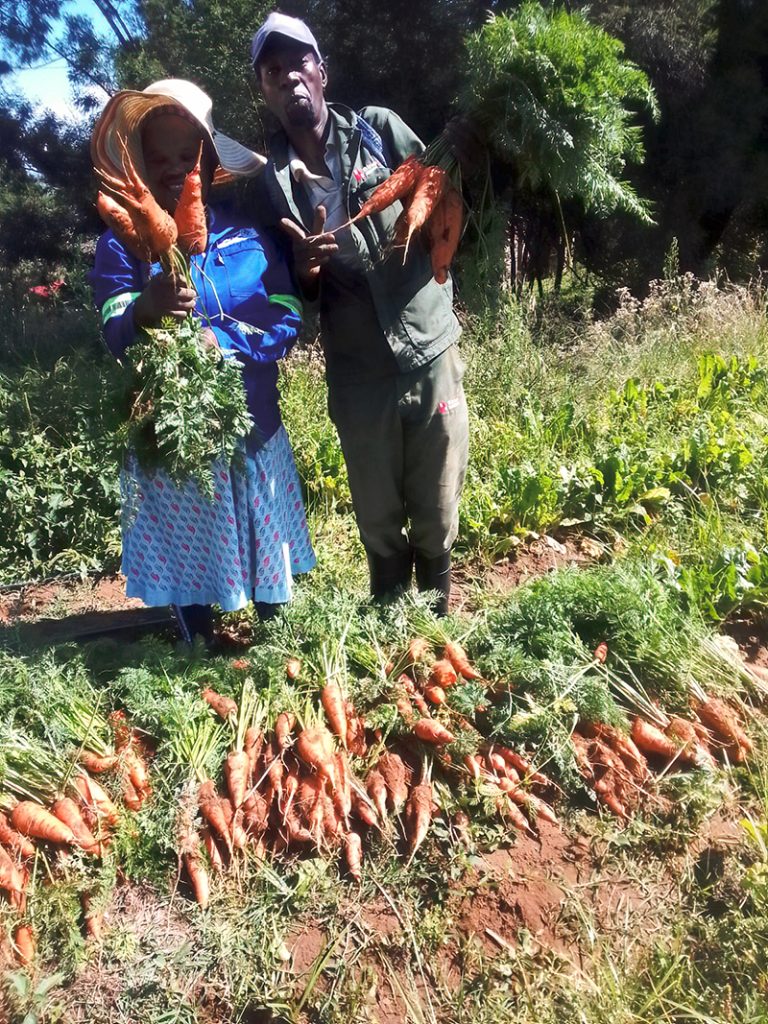
The Mofumahadi MaMontoeli Mota vegetable project of the Batlokoa Ba Mota cultural community in Tsheseng, Phuthaditjhaba, in the Free State has, over the past few weeks, succeeded not only in supplying sufficient vegetables to the local feeding scheme but has also produced a surplus that is being sold by the involved community members. This contributes to improving their socio-economic circumstances and enhances access to affordable, nutritious food in the area. Spinach, carrots, pumpkin and onions have been successfully produced. This success follows the training in vegetable production that community members received in December 2025, as well as the successful installation and commissioning of a solar-powered drip irrigation system in September 2025.
The vegetable project is a joint initiative of the executive committee of the National House of Traditional and Khoi-San Leaders (NHTKL), AfriForum, Saai and the office of Morena e Moholo (Principal Traditional Leader) Montoeli Mota, of the Batlokoa Ba Mota. This historic partnership was established as part of the very first annual Lenaka Memorial Lecture, which was held at the end of 2024 at Manthatisi High School. AfriForum and Saai support the project through their agricultural development incubator, the Resilient Regenerative Agricultural Initiative (RRAIN).
“I am very proud of our community members who, through their hard work and perseverance, are managing to produce more vegetables than the feeding scheme requires, enabling them to also earn an income. I am also proud that they are successfully applying the knowledge and skills transferred to them, as it serves as proof of the potential that can be unlocked in rural areas with the right kind of support. I hope this success motivates other stakeholders to join the project so that it can develop to its full potential,” says Morena e Moholo Montoeli Mota, Morena e Moholo of the Batlokoa Ba Mota cultural community.
“The annual Lenaka Memorial Lecture serves not only as a platform to celebrate our heritage and cultural identity but also focuses on promoting development within traditional communities. The success of this project confirms the positive role that traditional leaders and traditional leadership structures, such as the NHTKL and provincial houses, can play in the socio-economic development of grassroots communities when genuine partnerships based on a shared vision and values are established,” says Kgosi Thabo Seatlholo, Chairperson of the NHTKL.
Barend Uys, Head of Intercultural Relations and Cooperation at AfriForum, emphasises that good relations and cooperation between cultural communities – grounded in mutual recognition and respect – are essential building blocks for ensuring peaceful and prosperous coexistence in the country. “Communities face major challenges that can only be resolved through community building. It is encouraging to see how this project tangibly promotes community self-sufficiency and has a positive impact on people’s lives,” he says.
“Many of the rural, communal areas have good agricultural potential that can best be developed and utilised through the commercialisation of agricultural activities. Therefore, it is crucial to foster the growth of more commercial farmers in these areas where they are most required. Projects like this create development opportunities for small-scale farmers, which have the potential to evolve into commercial farmers. It is therefore a priority and privilege for Saai to also be involved in this initiative,” says Leon Lourens, Development Coordinator at Saai.
“This project is named after my mother, Mofumahadi MaMontoeli Mota, because good deeds like these, which make a future possible for our children, are the best way to honour our ancestors’ legacy,” concludes Morena e Moholo Mota.
Dr Theo de Jager, Saai, Board Chair
theo@saai.org