


Working hand in hand to give
South Africa’s learners a better start
The official theme for World Food Day 2025 – “Hand in Hand for Better Foods and a Better Future” – could not have been more relevant to South Africa’s ongoing efforts to beat childhood malnutrition.
Highlighting the power of collaboration to build sustainable, food-secure futures, the theme echoed the importance of governments, industries, and communities joining forces to achieve zero hunger.
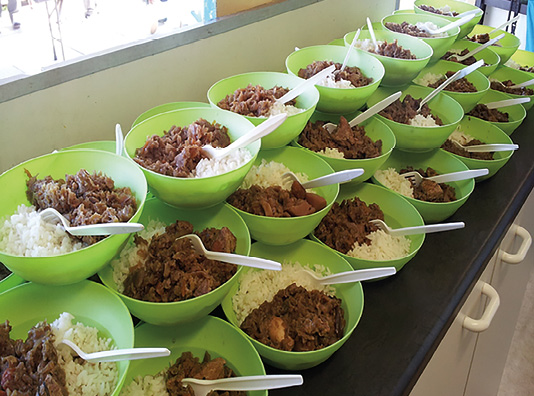
In South Africa, the National School Nutrition Programme (NSNP), run by the Department of Basic Education, provides daily meals to millions of learners in under resourced communities. For many children, this meal is the only one they will receive all day, and for most the only hot meal, making its nutritional quality critical.
Yet with rising food prices and limited budgets, the challenge remains how to stretch every rand while ensuring that each plate offers real nourishment.
To help address this, Potatoes SA recently launched a proof-of-concept trial to explore the value of incorporating potatoes into NSNP meals. The results were overwhelmingly positive, highlighting the value that could be unlocked when government and agricultural commodity organisations worked together to solve malnutrition.
“All food is not created equal,” said Willie Jacobs, CEO of Potatoes SA. “We can’t afford to fill children’s stomachs with empty calories that leave them hungry and lethargic soon after eating. Potatoes are a whole food – nutrient-dense, affordable, and easy to prepare. Research shows that they provide natural energy and essential nutrients that boost both body and brain.”
The trial, conducted at five Gauteng schools, including Moses Kotane Primary (Soweto), Dulcie September Primary (Rabie Ridge), Kgabo Primary (Atteridgeville), Banareng Primary (Saulsville), and Morakoma Primary (Mamelodi West), found that learners who ate potatoes as part of their lunch were more focused and energised, and reported feeling “fuller for longer”.
Teachers reported fewer post-lunch energy slumps and higher levels of concentration among learners after they had eaten meals containing potatoes, compared to when other starches were served. Further positive indications were that the percentage of learners showing up to collect meals increased when potatoes were on the menu.
Kitchen staff found that potatoes were simple to integrate into existing menus using the same cooking equipment. Notably the cooking time to prepare potatoes was less than other starches, resulting in reduced energy costs.
“The results confirm what we’ve seen in research: potatoes are a powerhouse of nutrition,” said Dr Carmen Muller, nutritionist at the University of Pretoria. “They offer vitamins, minerals and high-quality, easily absorbed protein, which can help combat micronutrient deficiencies and support healthy cognitive development.”
The trial showed that potatoes are a practical solution for overstretched kitchens, acting as a meal extender that makes each pot of food go further, while diversifyingthe menu with a food that learners enjoy and rarely have access to at home.
Despite these promising results, potatoes have yet to be included on the official NSNP menu, which currently offers maize meal, rice, and samp as starch options.
Jacobs emphasised that this is not a criticism of the existing programme but an invitation to create a valuable public-private-partnership.
“The Department of Basic Education has achieved incredible reach through the NSNP. Together, we can build on that success. By working hand in hand with the potato industry, we can ensure learners get the nutrition they need to learn, grow, and thrive,” Jacobs said.
South Africa is not alone in facing food insecurity and micronutrient deficiencies, issues that contribute to childhood stunting and poor educational outcomes across sub-Saharan Africa. But by adding nutrient-dense, locally produced foods such as potatoes to school meals, the country can take a meaningful step toward ending hunger and unlocking children’s potential.
“Good nutrition is the foundation of learning,” Jacobs concludes. “Potatoes can help us make every meal count, for every child, every day.”
Potatoes SA