

Briniging catalytic funding for real impact
Kgodiso Development Fund (KDF) – a PepsiCo R600 million independent fund committed to enhancing transformation – is making inroads by combining funding, skills development, market access and regenerative agriculture support for black-owned farms and agro-SMMEs.
A separate board of trustees, independent executive leadership, standalone legal status, and public-interest mandate together structurally insulate the Fund from direct PepsiCo control, allowing the Fund to operate autonomously.
In 2020, when PepsiCo finalised its acquisition of Pioneer Foods, one of the commitments made was to invest R600 million in a development fund to help transform the South Africa food system. Aligned to the United Nation Sustainable Development Goals and the government’s 2030 National Development Plan roadmap, KDF was designed to support the growth and scaling of black-owned emerging farming enterprises and SMMEs, promote regenerative agriculture practices, and encourage innovation.
Of the total investment, R300 million was allocated to emerging farmers to upscale their capabilities and provide opportunities to integrate into the value chain; R200 million went to supporting education – to enable initiatives providing appropriate training and upskilling, thereby enhancing a skills pipeline for PepsiCo or other corporates; and R100 million was ring-fenced to provide incubation and technical support to small businesses supplying goods or services to PepsiCo or corporates partnering with the global food chain.
From the R200 million education budget, R46 million was targeted to forge strategic partnerships with several higher education institutions to leverage their academic expertise and co-create sustainable and transformed agricultural initiatives aligned to KDF’s mandate.
The recently released 2025 integrated report shows that KDF’s target for 2024/5 financial year was to provide access to funding for 50 farming and other SMMEs, through loan approvals totalling R100 million. However, it exceeded this beneficiary target, funding 96 small and medium farmers. Loan approvals amounted to R92 million, with a total pipeline of R144 million assessed. Coming to return on investment, the Fund’s target was 6.8% through interest revenue collected from loans. Instead the Fund achieved an ROI of 6.99% demonstrating both resilience and the disciplined efforts of its Post Investment Management team.
KDF had also set a target of securing R40 million in leveraged funding through co-funding relationships. This resulted in the Fund mobilising R26.6 million in leveraged funding – representing 67% of the target. The primary co-founding partnership was with Standard Bank Agribusiness Unit, which remains an important collaborator in extending the Fund’s reach and deepening its impact.
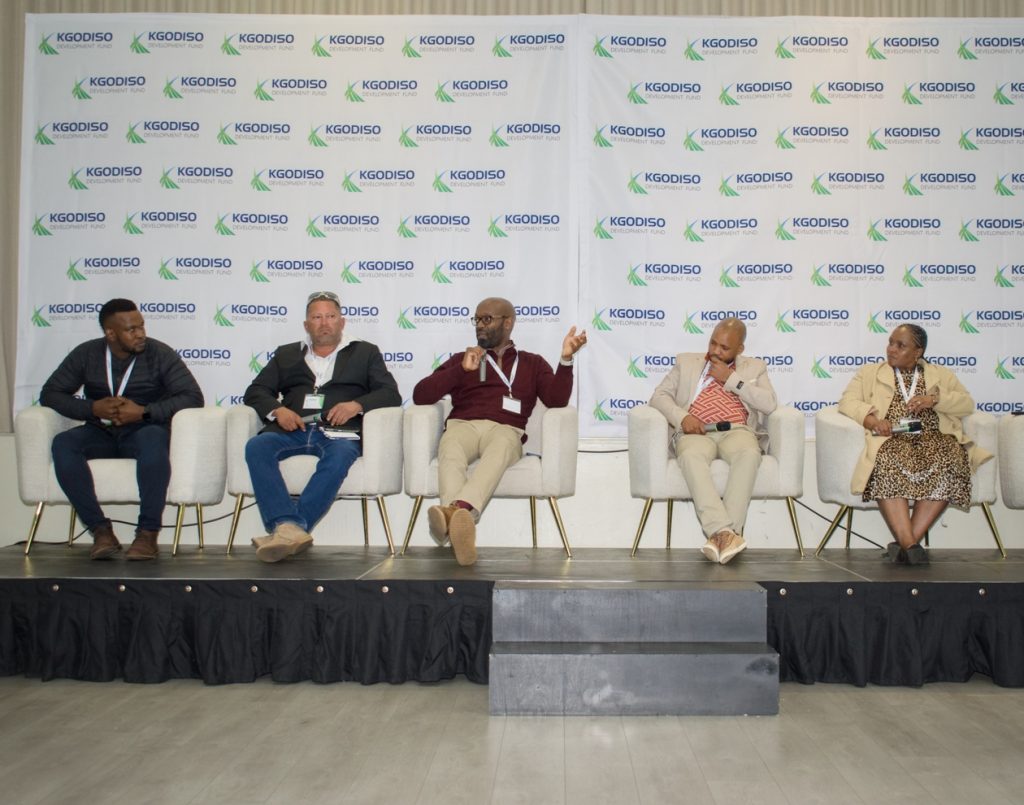
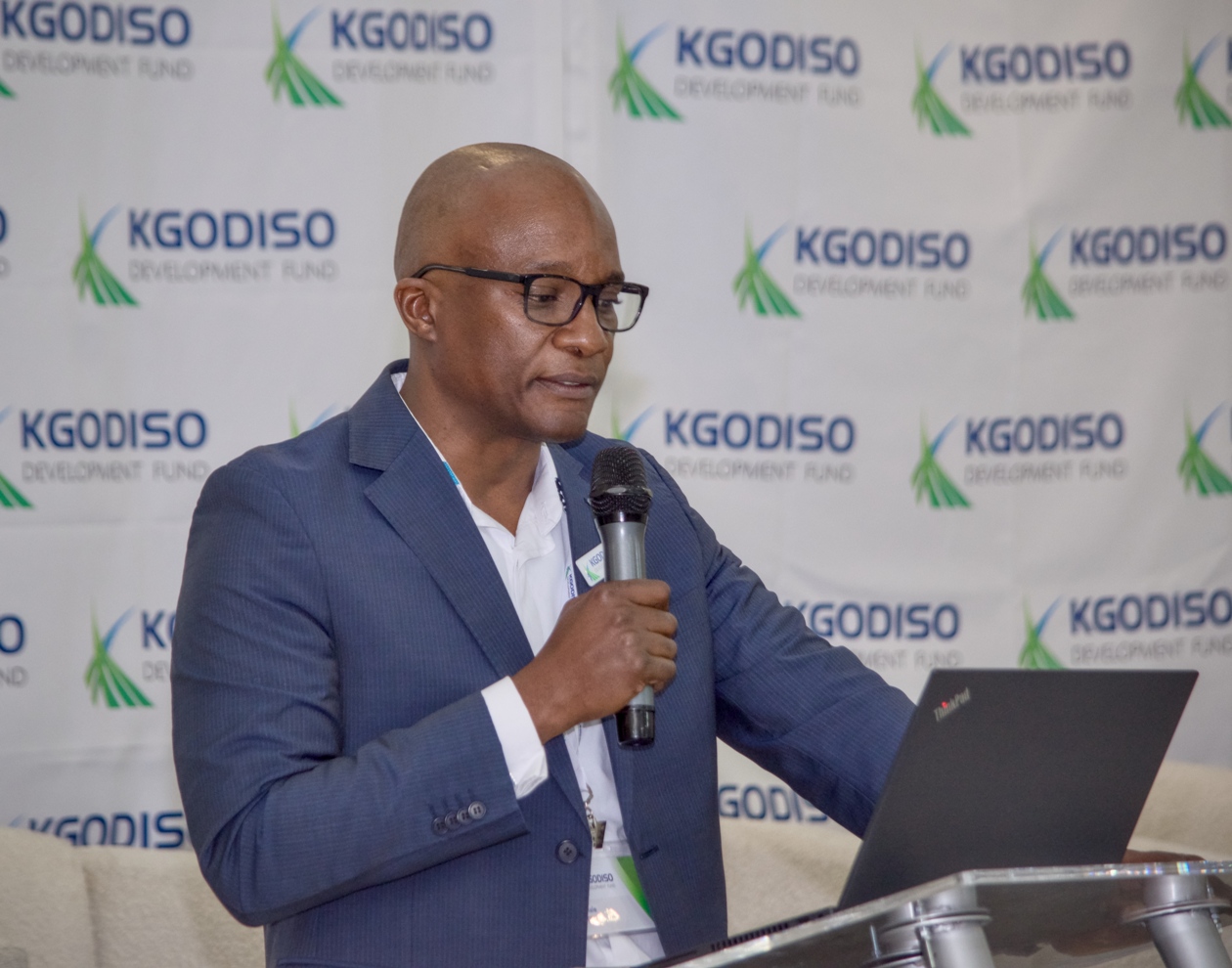
Speaking at the recent official release of the fund’s 2025 integrated report, KDF Executive Director Diale Tilo, described the announced amounts as “not merely statistics”.
“Behind every number is a farmer securing seed for the next planting season. A family business purchasing machinery. A young entrepreneur daring to enter the agro-processing space. A worker earning an income. A rural household regaining hope. This achievement demonstrates something important: developmental finance and financial discipline are not enemies. They can coexist. In fact, they must coexist if transformation is to endure.”
He emphasised that KDF’s strategic priority was to tackle local development challenges faced by emerging black businesses in the food and beverage value chain and strive for tangible impact effecting large-scale change. The Fund, Tilo added, also strives to address knowledge and skills gaps across the South Africa food system via interventions such as applied agriculture R&D and climate-resilient crop development.
The Executive Director added that SA’s economic recovery required bold interventions that did more than stimulate growth.
“They must also reshape the structure of our economy to be more inclusive, more robust and more sustainable. KDF is an example of this forward looking intervention: it enables productive investment, strengthens food security, enhances export readiness and empowers the next generation of producers, processors, in partnership with our valued stakeholders. Together, we are not only financing agriculture, we are cultivating transformation, empowering communities and investing in a future where small and medium farmers thrive as anchors of food security and inclusive growth.”
Speaking in support of the Fund’s model of leveraging capital through co-funding relationships, KDF Chairman of the Board of Trustees Setlakalane Molepo said the future of inclusive agricultural development in South Africa would require significantly greater pools of catalytic capital.
“If we are to expand support to emerging farmers, strengthen agro-processing, deepen market access and scale rural industrialisation, then future capitalisation becomes imperative. No single institution can carry this burden alone. The future demands collaborative financing models that bring together the private sector, government, development finance institutions and international investors in pursuit of common developmental objectives. And this is where KDF presents a compelling model. Because KDF demonstrates that development finance can be disciplined, transparent and impactful.”
Molepo went further to say KDF’s success was owed to a leadership driven by passion, integrity, accountability and commitment to South Africa’s transformation agenda. This was so because development without accountability eventually collapses under the weight of its own intentions, he averred.
“At KDF, governance is therefore not a compliance exercise. It is a moral obligation. Indeed, in a country confronted by inequality, unemployment and underdevelopment, integrity is not optional. It is foundational. From inception, the Board has remained deliberate in ensuring that KDF is anchored on accountability, transparency, ethical leadership and fiduciary discipline.
“We have sought to ensure that the institution remains aligned to national priorities, and these are inclusive growth, transformation, job creation, localisation, gender parity, SMME development and food security.”
For Molepo, being in leadership at such an impactful entity as KDF “is such a patriotic injunction – one that requires constant vigilance, independent oversight, and sound financial controls. And above all, leadership that understands public trust as among the most valuable forms of capital any institution can possess.”
Progress made since KDF’s formation include the establishment of the Vine Academy and Model Farm in Kakamas (Northern Cape) with Raisin SA – providing classroom-based and practical training for emerging farmers, as well as a centre for research and development in best practice raisin farming and production in South Africa.
KDF also promotes market integration enabling beneficiaries to get a route to PepsiCo’s procurement (PepsiCo buys over 1.5 million tonnes of local maize, wheat potatoes, oats and raisins annually), thus turning support into real commercial relations. The fund is also committed to partnership-driven delivery, working with partners like Raisins SA to build academies and model farms that provide practical training and R&D for specific crops (e.g. raisins in the Northern Cape).
Through its investment in education KDF creates access to education, skills development, and employment pathways for South African youth aged 18 to 34. Since inception, the initiative has empowered young people through 87 fully funded university bursaries, 47 paid bursaries, over 200 unemployed learnerships, and 99 graduate programme opportunities. Together these programmes are building a pipeline of future leaders, critical talent, and qualified youth equipped with relevant skills, industry exposure, and career-shaping experiences.
In 2021, the inaugural Graduate Programme and Future Leaders Programme kicked off with 18 individuals in each group. The Graduate Programme is an NQF Level 4 programme focusing on building functional capability, while the Future Leaders Programme is an NQF level 6 programme focusing on developing leadership capability. The programmes have already seen successful cohorts completing the courses and for the most part gaining permanent employment within PepsiCo.
There is also focus on inclusion by prioritising black-owned and black women-owned enterprises and emerging farmers, addressing the concern that black Africans own only about 4% of South Africa’s individually owned farms and agricultural holdings.
Speaking to the media during the official release of the KDF integrated report, black farmers granted loans (mostly for crop production) expressed their gratitude for the support they get from the Fund. They confirmed that without such kind of support they would not have survived as role-players in the still white-dominated agricultural sector. Beneficiaries included:
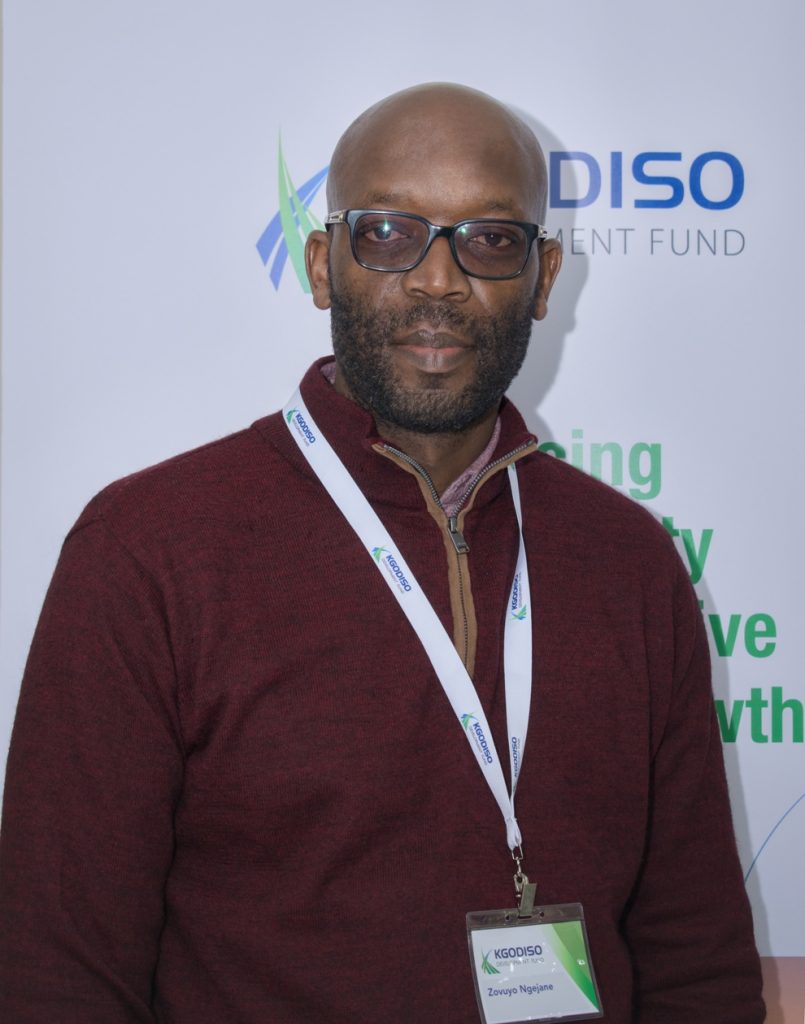
Zovuyo Ngejane: maize, beans, sheep and cattle farmer from Kokstad. Ngejane grew up in a family where his father had a tractor and used to plough for other villagers. That’s where his interest in farming grew. Later in life he leased land from other landowners to start his own farm. In 2000 he bought land from a white farmer who went bankrupt. Last year he received a R4million loan from Kgodiso Development Fund for crop production.
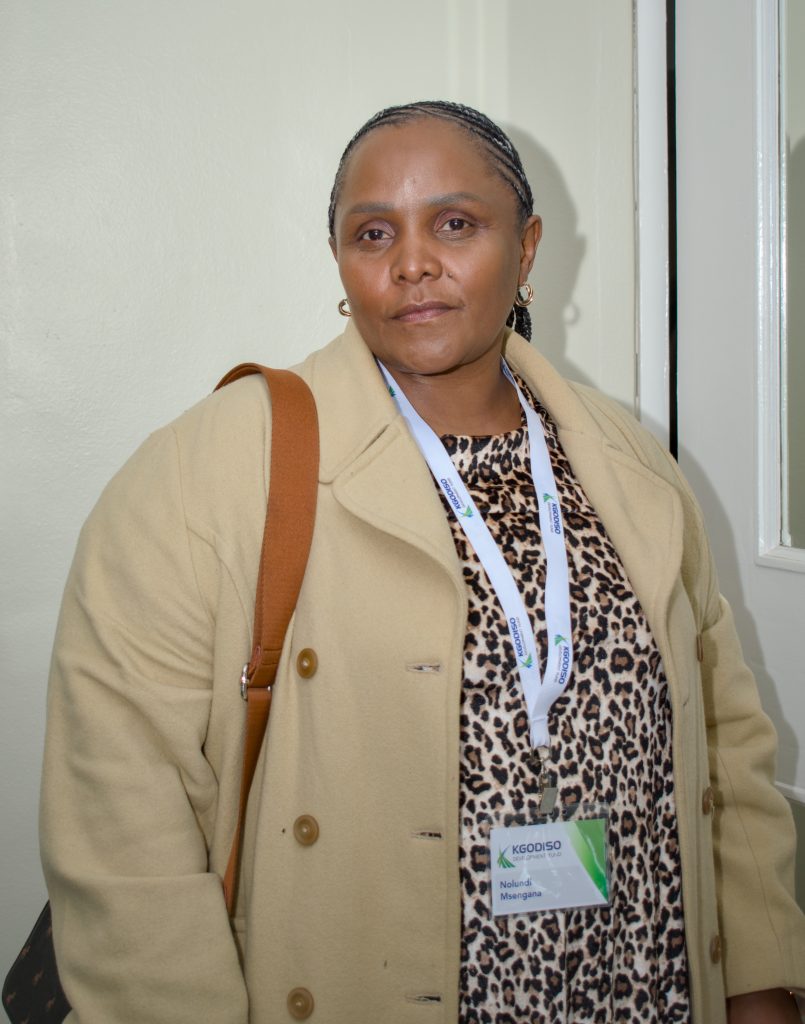
Nolundi Msengana: originally from a village in the Eastern Cape where her father was a subsistence farmer. In 2007 she moved to Gauteng and settled in Vanderbylpark where she is a livestock (goats, sheep and cattle) farmer. She has a 30-year lease with the government. In 2024 she received a R2 million loan from KDF for crop production.
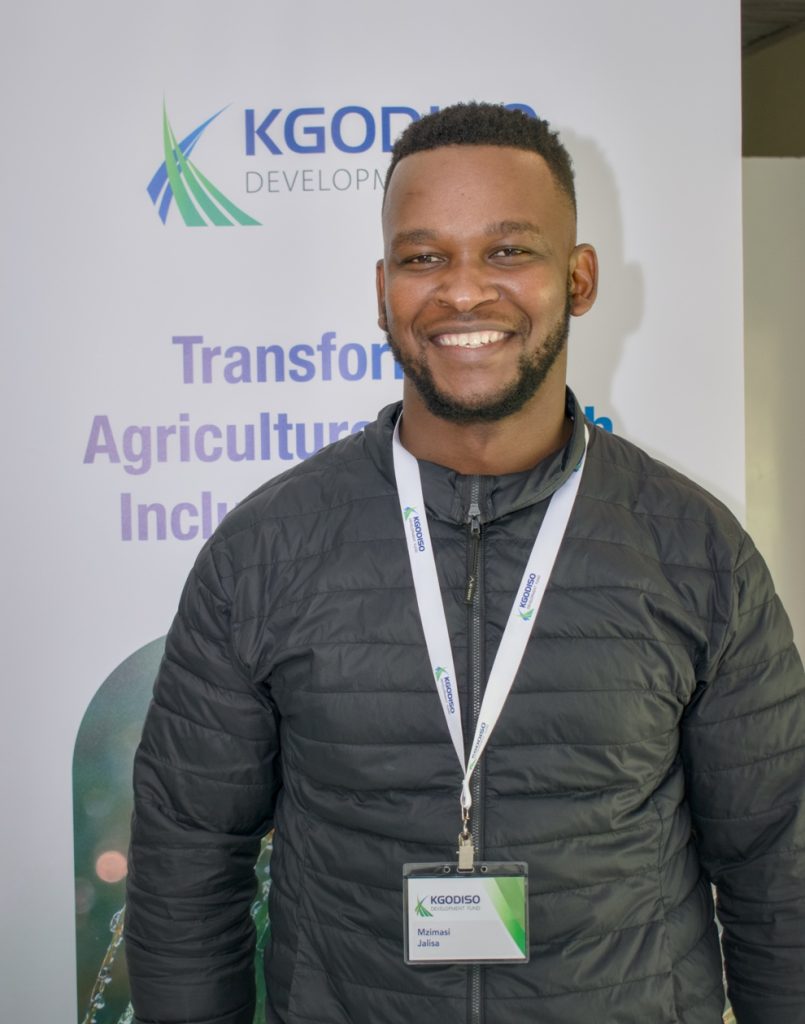
Mziwasi Jalisa: co-owner of Jay Jay farming, a youth-led agribusiness in Baziya near Mthata in the Eastern Cape. Jalisa, together with Siphe Joyi, is the co-owner of Jay Jay Farming, which has become a local example of how communal land, partnerships, and finance can support black youth agri-business growth. The farm now grows white and yellow maize, soybeans, potatoes, cabbages, and spinach. Recent reports say Jay Jay also has a cattle component and supplies local markets, animal feed businesses, retailers and communities in the Eastern Cape.
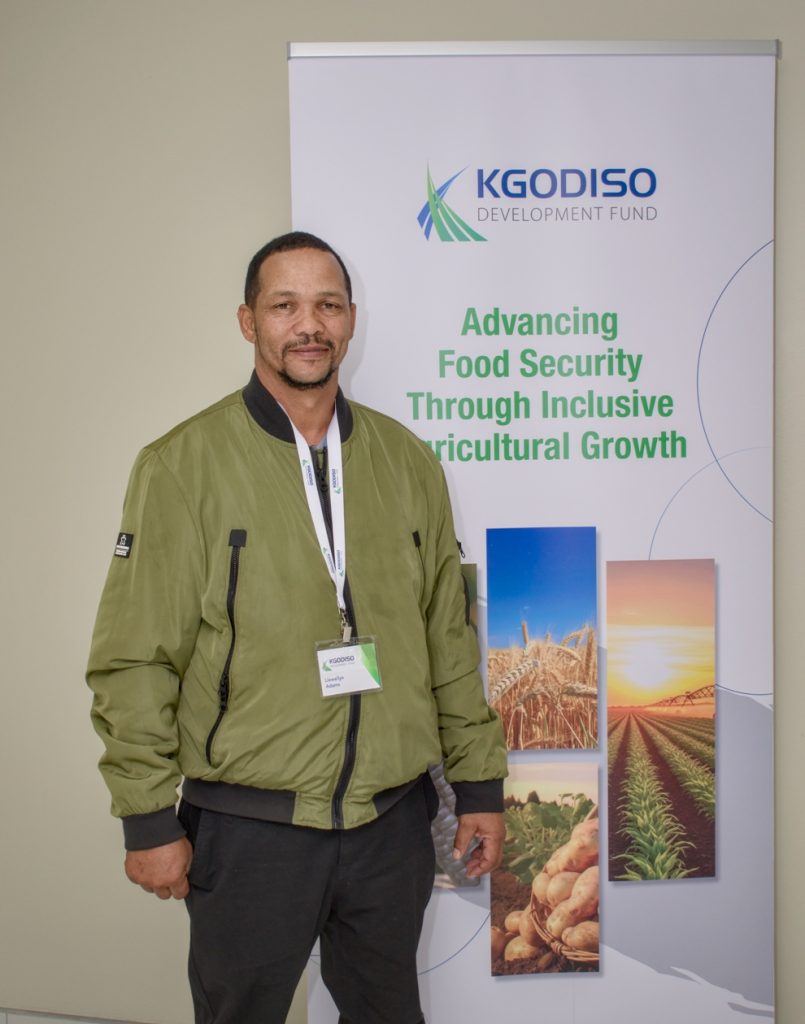
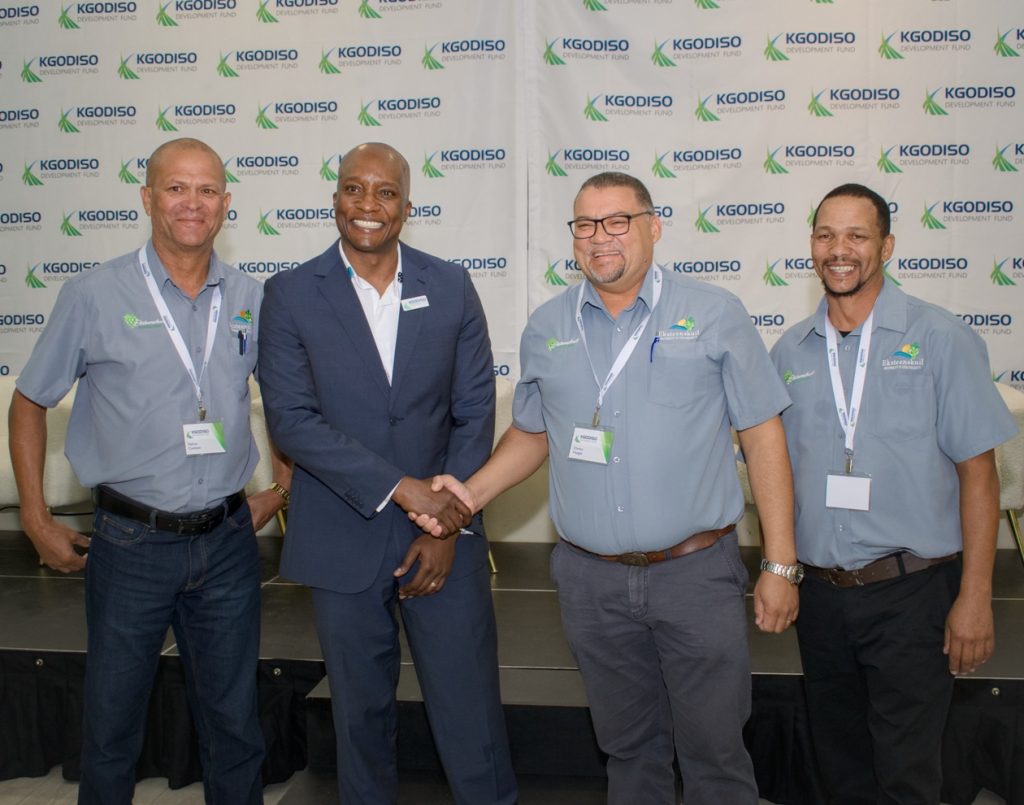
Llewellyn Adams: chairman of the Eksteenskuil Co-op a well-known smallholder grape and raisin farming cooperative in the Lower Orange River valley near Keimos in the Northern Cape. It is owned by producer members and has become an important example of collective farming, export-oriented agriculture and rural livelihoods in the province. The co-op is a beneficiary of the KDF R28 million investment in various black farmers to expand the production and exportation of raisins.
While expressing their gratitude for KDF’s life-changing support for up-coming black farmers, the beneficiaries also raised concerns about the systemic hurdles, such as land tenure, that impede the sustainable impact of interventions such as KDF.
Their contention is that Kgodiso Development Fund is indeed a commendable venture because it can bring capital, market access, training, and value-chain support, but those benefits are limited because most beneficiaries are either leasing land from government or other land-owners, or are operating on the basis of permission to occupy on communal land. This makes it difficult to plant when farmers still lack secure land rights and long-term tenure and certainty.
It is also the beneficiaries’ view that if institutions and value-chain gatekeepers around maize remain dominated by the historical commercial farming base, then black and emerging farmers may technically participate in the market while still capturing only a small share of value.
This view is really about structural exclusion, not just representation. Even where formal deregulation exists, market power can remain concentrated if the practical rules of the system still favour large established operators, especially those with scale, storage, capital, and long-standing relationships.
For them, eventually the problem is not only the “boards” in the old sense, but the broader architecture of the maize economy. If that architecture is not deliberately opened up, transformation will be slow and uneven, and black farmers will continue to face thin margins while established players capture the better end of the chain.
Ido Lekota