


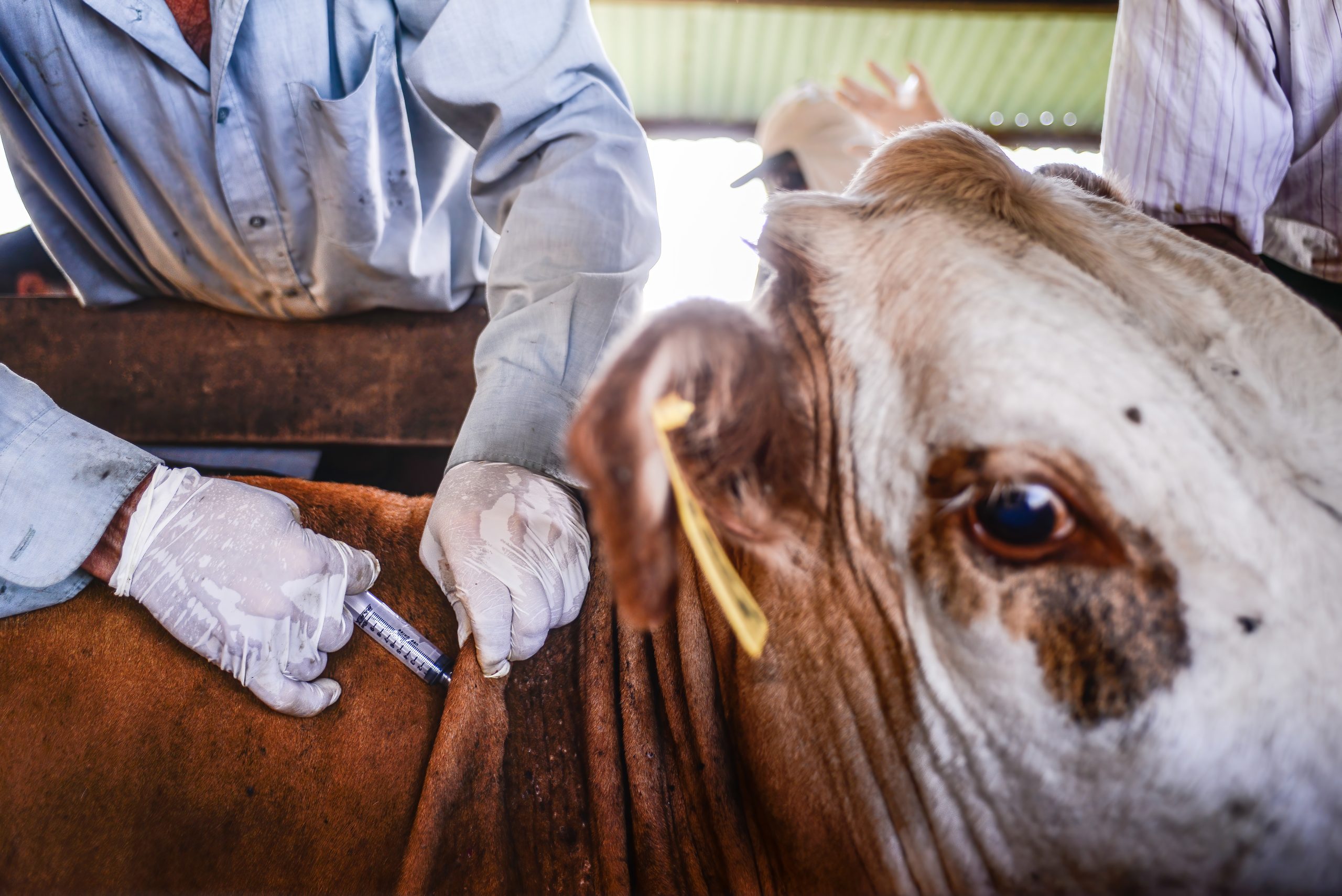
Foot-and-mouth disease develops into a national agricultural and consumer crisis
TLU SA met shortly after Minister John Steenhuisen’s media conference of 14 January to evaluate the foot-and-mouth disease crisis and to discuss the Minister’s points. Although the Minister announced a technically comprehensive strategy, the reality on the ground shows that South Africa is no longer dealing with effective disease control, but with the management of a crisis that is already out of control. The speed and scale at which the disease is spreading are dangerously undermining farming incomes, food security and South Africa’s international market access.
TLU SA agrees that the core problem is not a lack of plans, but the State’s lack of capacity to implement them. Communication, statements and long-term strategies do not help farmers who are today losing their herds, contracts and financial livelihoods. The State continues to cling to centralised control, but simply does not have the ability to apply it at the scale required. Instead of stopping the disease, it is merely being “managed” while the crisis deepens.
There is still no clarity on what has happened to the R500 million that was allocated to restore vaccine production at Onderstepoort. Meanwhile, private vaccine production, for which proven capacity, expertise and knowledge exist in South Africa, is being obstructed by regulation. Even commercial farmers with strict biosecurity are not allowed to vaccinate themselves under emergency regulations, while expensive imported vaccines with shorter protection are permitted.
The already researched and developed foot-and-mouth disease vaccine available at the ARC must be released immediately and made available at scale at fair prices. These institutions exist to serve the country and its industry, not to worsen a crisis through regulatory or administrative delays. The handling of these vaccines must be aimed at saving the livestock sector and food security, not at placing procedures above survival.
TLU SA is convinced that the solution does not lie in further centralisation, but in decentralisation with proper control. The government must now declare a national state of disaster and introduce emergency regulations that allow the private sector to manufacture and procure vaccines, that allow farmers under registered supervision to vaccinate their own animals, and that prioritise state veterinarians to serve the uncontrolled informal sector. Without decisive movement control and mass vaccination at scale, this disease will not be stopped.
This crisis is no longer only an industry problem. It affects every consumer in South Africa. Farmers are being forced off their farms and meat prices are becoming unaffordable. Food security is under threat. The economic and social consequences will extend far beyond the agricultural sector alone.
TLU SA acknowledges that the State’s long-standing regulatory and capacity failures have placed farmers under immense financial pressure and that short-term decisions have sometimes been taken that did not help to limit the spread of the disease. In the interest of the future, however, TLU SA makes an urgent call for cooperation on movement control and biosecurity, but this can only work if the State removes the brakes and allows the private sector to use the capacity that already exists.
TLU SA stands firmly behind the sustainability of farmers, and therefore the financial aspect is also critically important to address, and the cost of vaccines should be borne by the State.
The private sector stands ready with capacity, expertise and infrastructure. What is lacking is the political will to share control in the interest of food security, economic stability and the survival of South Africa’s farming communities.
Time is a luxury we no longer have. If Brazil could do it with 240 million cattle, South Africa with approximately 14 million animals should certainly be able to do so, provided practical solutions are placed above ideological control.
Bennie van Zyl, General Manager TLU SA