


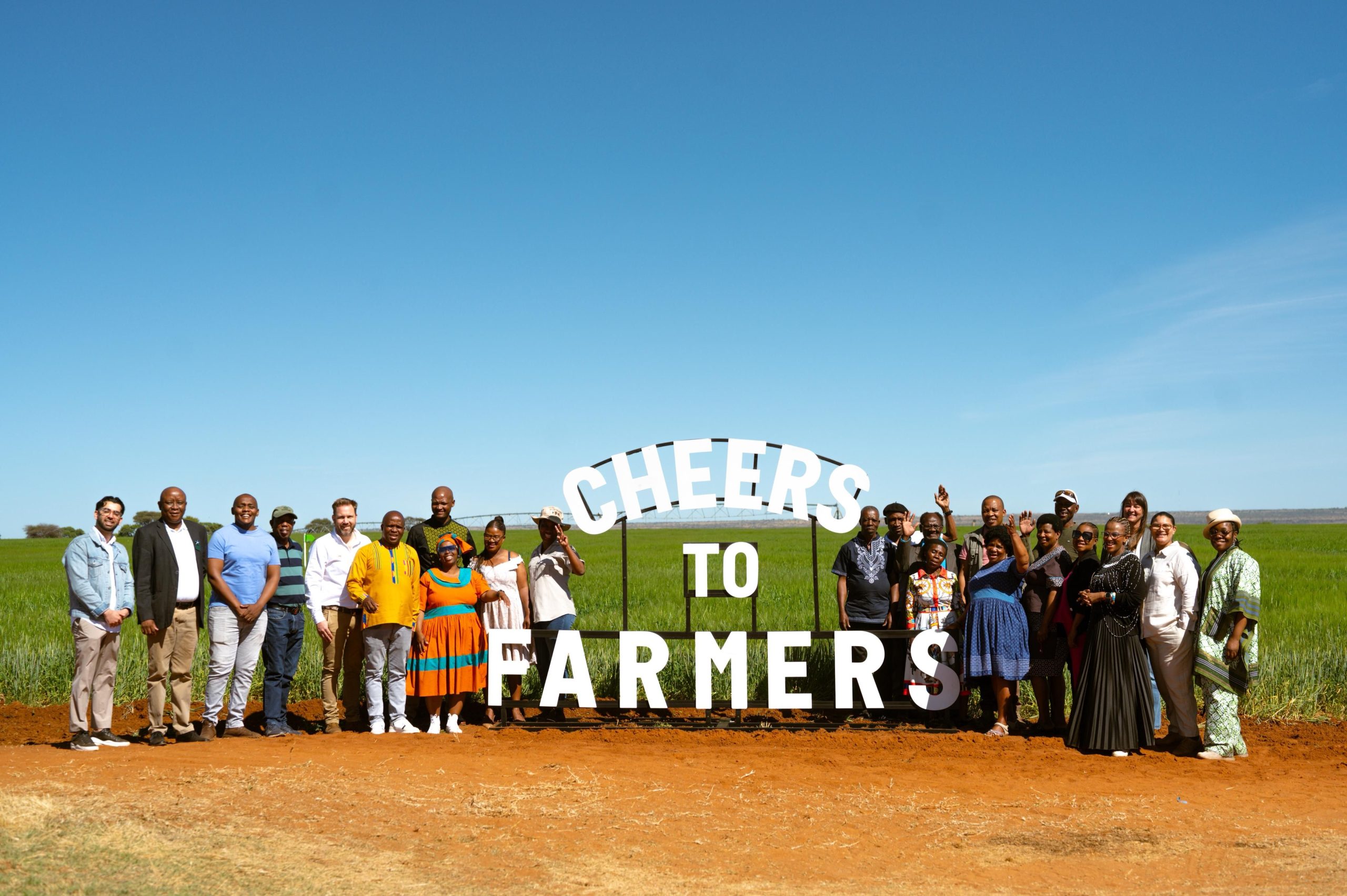
Taung farmers deliver 17,400 tonnes of barley,which was all procured by SAB, highlighting the company’s commitment to agriculture
Taung, North West, 18 September 2025. The beer industry is deeply rooted in South Africa’s farming economy, contributing over R2.2 billion to agricultural GDP and supporting more than 38,000 jobs in agriculture nationwide. Since 2018, South African Breweries (SAB) has invested over R650 million in agrarian development, ensuring that beer brewed in South Africa is made from natural, locally sourced ingredients while supporting inclusive growth by empowering communities across the country.
Today, this impact was brought to life at the ‘Cheers to Farmers’ event in Rooiwal, Greater Taung Municipality, where SAB celebrated the role of local farmers in powering the country’s beer value chain. The event highlighted how innovation, investment, and committed partnerships are shaping a sustainable agricultural sector that supports livelihoods and communities.
The Premier of theNorth West, Lazarus Mokgosi,stated that the event showcased the effectiveness of partnerships among businesses, farmers, and the government. “Here in Taung, we see what investment in agriculture really means: productive land, jobs for local households, and resilient communities. Farming is the foundation of our economy, and by supporting our farmers, we are also building a more inclusive and sustainable future for the North West Province,” he said.
The impact of SAB’s investment is clear in Taung. Farmers in the area delivered an impressive 17,400 tonnes of barley, with an average yield of 4.9 tonnes per hectare. This output was supported by R70 million in loans and R16 million in mechanisation support, co-funded by SAB and the South African Cultivar and Technology Agency (SACTA). With these resources, 80 farmers were able to service over 2,140 hectares of land, strengthening agricultural productivity in the region. In addition, the programme has created and sustained 292 jobs, both direct and seasonal, ensuring that the benefits reach households and communities across Taung.
“South Africa’s agricultural success rests on collaboration and innovation. The long-term commitment to research and development we witnessed today, including the introduction of new barley varieties and advanced mechanisation support, is helping farmers increase productivity while staying competitive in global markets. Beyond delivering tonnes of grain, our farmers are ensuring food security, economic growth, and opportunities for young people and women in agriculture,” saidDr Sifiso Ngqangweni, CEO of the National Agricultural Marketing Council (NAMC).
Beyond Taung, SAB’s investment in agriculture has been pivotal for national growth. Over the past seven years, the company has invested more than R200 million in research and development, opening Africa’s largest barley research facility in Caledon. Partnerships worth more than R64 million with international and local institutions have enabled the introduction of new barley varieties and the adoption of advanced farming techniques in the country. SAB has also pioneered the cultivation of nine unique hop varieties in the Western Cape, the only region in Africa where hops can be grown.
“At SAB, we are deeply committed to the farmers who make it possible for us to brew high-quality beer with natural ingredients grown right here in South Africa. For the past 130 years, the story of SAB and our industry is the story of these farmers; men and women who drive innovation in their fields, create jobs in their communities, and deliver crops that meet the highest standards. Cheers to Farmers is our way of celebrating their resilience and recognising the vital role they play in building a stronger economy for all,” saidRichard Rivett-Carnac, CEO, SAB.
SAB’s agricultural programmes reach more than 500 farmers annually, with a focus on empowering women, youth, and developing farmers through skills training, funding, and access to markets. Partners such as FarmSol, NAMC, and provincial governments play a crucial role in creating an inclusive ecosystem that enables farmers to thrive.