

A sustainable boost and game-changer for smallholder cabbage farming in South Africa
Smallholder farmers in South Africa face significant challenges, from rising input costs to declining soil fertility. In the pursuit of sustainable and affordable farming solutions, digestate – a nutrient-rich byproduct of anaerobic digestion – has emerged as a promising biofertilizer. Unlike large-scale commercial farms that rely on synthetic fertilizers, smallholder farmers benefit from alternatives that enhance soil health, reduce costs, and align with environmentally friendly practices. Digestate offers a unique advantage by supplying key nutrients while improving soil structure, making it an ideal candidate for cabbage production in small-scale farms.
Comparing digestate with other fertilizers
When comparing digestate, traditional manure, and synthetic fertilizers, each option presents distinct benefits and limitations. Manure, commonly used by smallholder farmers, enriches the soil with organic matter and microbial life. However, its nutrient content varies widely, making it less reliable for consistent cabbage growth as it is a heavy nutrient eater.
Synthetic fertilizers, on the other hand, provide targeted nutrients that lead to rapid plant development and higher yields. Yet, they often degrade soil health over time, requiring continuous application, which can be costly for small-scale farmers.
Digestate strikes a balance between the two: It contains essential nutrients like nitrogen, phosphorus, and potassium in a more accessible mineral form than manure and synthetic fertilizers, while also improving soil fertility without the harsh side effects of synthetic inputs for optimal cabbage production.
Cabbage requirements
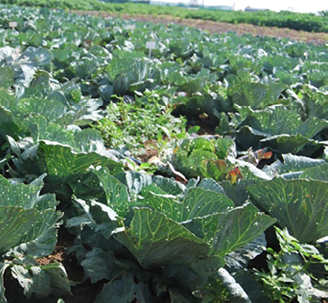
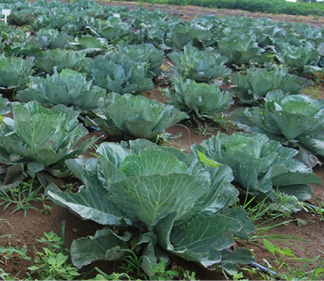
Cabbage crops thrive on nutrient-rich soil with ample moisture retention. Smallholder farmers using digestate report improved plant resilience, better root development, and enhanced leaf growth compared to farms reliant on manure alone. While synthetic fertilizers deliver faster results, they can lead to nutrient leaching, reducing long-term soil productivity. Digestate helps mitigate this issue by fostering beneficial microbes and increasing organic content, leading to sustainable nutrient cycling in cabbage farms. As smallholder farmers look for cost-effective methods, digestate provides an affordable and locally produced solution that supports both immediate growth and long-term soil health.
Digestate and cabbage
A crucial factor in adopting digestate is ensuring proper application techniques. Smallholder farmers must consider dosage, timing, and mixing methods to optimize cabbage yields. Unlike synthetic fertilizers, which follow standardized application guidelines, digestate requires thoughtful integration based on soil conditions and crop requirements. Agricultural extension services and farming cooperatives play a vital role in educating farmers on best practices for digestate application. By refining application strategies, smallholder farmers can maximize the benefits of this biofertilizer while avoiding potential imbalances in soil nutrient composition.
Cost-cutting economy
Economic viability is another key consideration in valorization of digestate as biofertilizer. Manure is widely accessible and often free, but its inconsistent nutrient profile can lead to unpredictable results. Synthetic fertilizers, while effective, demand a financial commitment that many smallholder farmers struggle to afford.
Digestate presents a middle ground. Available through biogas production initiatives during organic waste treatment in anaerobic (oxygen free) conditions, it offers a scalable and cost-efficient alternative.
Encouraging local biogas production can create opportunities for farmers to access digestate at lower costs, reducing dependence on expensive external fertilizers and fostering a circular climate-smart agricultural economy.
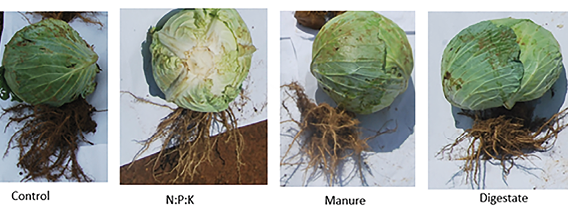
Digestate open-field study
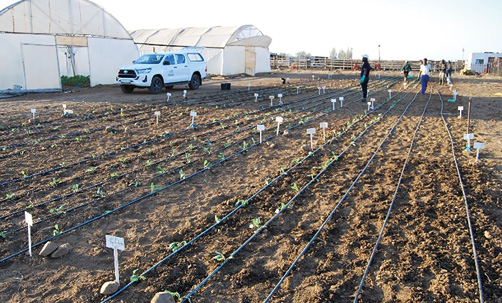
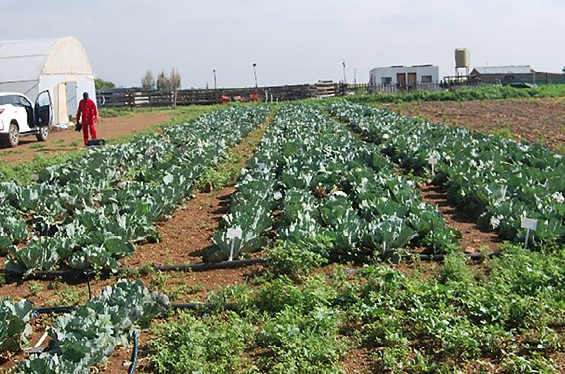
As innovation development and commercialisation form part of the Agricultural Research Council’s (ARC) mandate, a scientific research study was conducted in the Vereeniging, Gauteng Province, located at coordinates (26°39’58”S, 27°58’ 8.58”E). This was an open field study that took place in two seasons (spring and summer) whereby the numerical data was collected from the cabbage crop.
The treatment factor of this experiment was fertiliser, and it had three different sources, namely kraal manure, digestate, and N.P.K. Since the cabbage crop was used as a research experimental crop and is well-known to require more plant nutrients to grow, this led to the development of different application rates of digestate. In this study, the different levels of digestate were compared to the standardised rates of kraal manure and N.P.K. along with the control (no fertilizer) to observe and record their effects on the phenotypic and physical features of the cabbage crop. Soil analysis reports, crop nutrient requirements, and digestate nutrient composition were used as a basis for developing the application rates. Digestate application rates developed were 22.5t/ha, 45t/ha, 67.5t/ha and 90t/ha.
The growth parameters collected in this study were plant height, number of leaves, chlorophyll content, photosynthetically active radiation (PAR), leaf area index (LAI), and head diameter. Results showed that application at 45t/ha, 67.5t/ha, and 90t/ had a significant effect on plant height, number of leaves, and LAI as compared to kraal manure and control at 31 days after planting (DAP). Application at 67.5t/ha and N.P.K. had similar plant heights at 40 DAP. This effect supports the efficiency and function of digestate, as it is composed of nutrients in a form readily available for plant uptake. Though 90t/ha of digestate application performed better as compared to control and kraal manure treatment, it was observed to inhibit root growth and development. This is because excessive nitrogen can lead to rapid but weak growth, making the plant susceptible to pests and diseases. This was observed during the cabbage production trial, where application rate of digestate at 90t/ha resulted in rapid but weak growth that was prone to pest infestation as compared to other digestate treatment. Furthermore, excessive nutrient application of digestate has been reported to lead to soil acidification, salinization, and nutrient imbalances, degrading soil health and long-term fertility. This can also negatively affect soil microbial diversity and activity, which are crucial for nutrient cycling and plant health. This result shows that the digestate at 67.5t/ha can support the vegetative growth of cabbage until maturity.
This showed that an optimum once-off application rate of 67.5t/ha of digestate can support the cabbage from the seedling stage to the yield maturity stage. These digestate application levels show a possibility to grow cabbage crops with only the organic nutrients, reducing chemical fertiliser dependency. This research study promotes the use of organic materials for crop production (sustainable agriculture) and aims at developing an optimum rate of digestate that improves crop health, quality, yields, and soil biological activities.
Conclusion
In conclusion, digestate shows potential to serve as an alternative biofertilizer to reduce the overuse of synthetic fertilizers for small-scale, medium scale and commercial scale farmers. The adoption and utilisation of digestate as a biofertilizer will maximise crop production in resource-poor communities and minimise the poverty rates and unemployment levels. Furthermore, the utilisation of digestate will maximise the soil fertility, health, and microbial population reducing the need for synthetic fertiliser and pesticide applications. The study is currently still in progress to investigate the effect of different levels of digestate on soil microbial populations and tracing the soil nutrient availability at different growth stages of cabbage.
Willy Maphutha Ramusi (Master student at ARC – VIMP and North West University)
Dikonketso Shirleymay Matjuda (Junior researcher at ARC- AP)
Sydney Mavengahama (Professor at North West University)
Lerato Bame Tsalaemang Matsaunyane (Research Team Manager at ARC – VIMP)
Erratum:
Incorrect advertising material for FMC was placed in the printed July/August 2025 issue